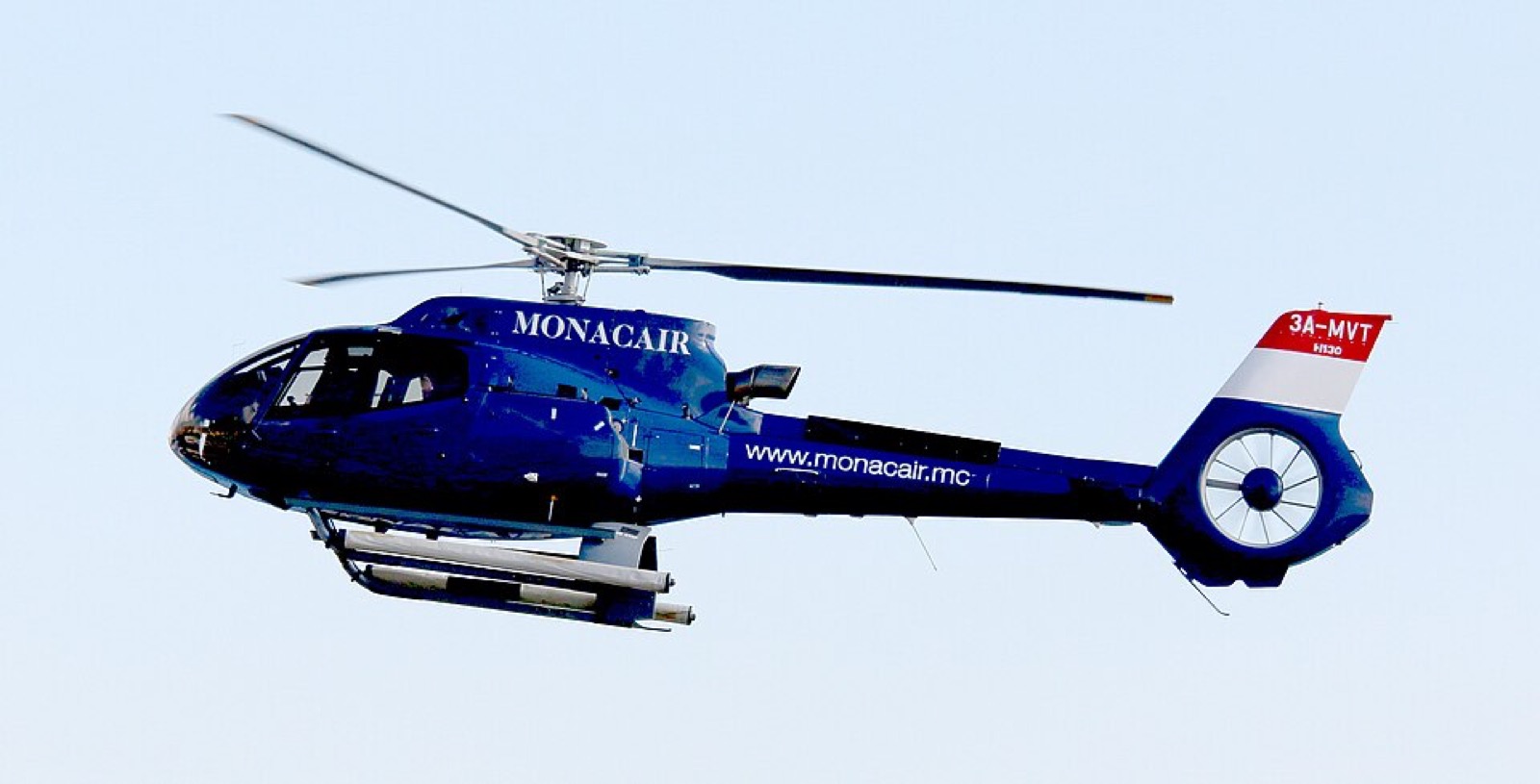
Photo: kitmasterbloke / CC BY 2.0
The Èze helicopter crash: what the investigation actually found
When a Monacair helicopter carrying Russian businessman Vyacheslav Taran crashed above Èze in November 2022, the conspiracy theories arrived within hours. A year later the BEA published its report. What it found was an impaired pilot, a bank of sea haze, and one of the most common ways helicopter pilots die.
On 25 November 2022, an Airbus EC130 T2 operated by Monacair left Lausanne, Switzerland, for the short flight south to Monaco. At 12:31, on approach to the coast, it flew into a mountainside above Èze. Both people on board were killed: the 35-year-old French pilot, and his sole passenger.
The passenger was Vyacheslav Taran, a 53-year-old Russian-born businessman who had lived in Monaco for a decade. He had founded Libertex, an online trading platform, and sat on the board of a Swiss cryptocurrency firm in Lausanne — the city he had just left.
Within hours, the crash stopped being an aviation story.
Why it became a conspiracy
Three details did the work.
The first was timing. Taran was the third figure in the cryptocurrency industry to die unexpectedly within a matter of weeks. To an audience already primed to see a pattern, a fourth data point was not required.
The second was a cancelled seat. A second passenger had been booked on the flight and pulled out at the last minute. In the reporting that followed, "cancelled" quickly became "mysteriously cancelled."
The third was official caution. The deputy public prosecutor of Nice, visiting the site, said that third-party involvement could not be ruled out. That is standard language at the opening of an investigation — it means nothing has been excluded yet, not that anything has been suspected. It was widely reported as though it meant the opposite.
Add a Russian businessman, a Monaco heliport, and a mountainside, and the story wrote itself. Taran's widow eventually issued a public statement asking the press to stop.
What the investigation found
France's Bureau d'Enquêtes et d'Analyses published its report almost exactly a year later, in November 2023.
The sequence it describes is unremarkable in aviation terms, which is precisely the point.
As the helicopter descended toward the coast, the pilot encountered a localised sea haze centred on the Col d'Èze, the pass between Nice and Monaco. This is a known local phenomenon — sudden, but familiar to anyone who flies the area regularly, as the pilot did.
He was not qualified for instrument flight and had little training in flying without visual reference. Faced with the cloud, he reduced speed, held his heading, and entered it. He lost all external visual references. The helicopter made a series of abrupt movements that triggered warning systems, and struck the rock.
The BEA noted that the cloud was avoidable. Turning west toward Nice, or east to stay north of the high ground, would have kept the aircraft clear. The pilot did neither.
The finding that changed the story
Post-mortem hair analysis established that the pilot was a long-term cocaine user, and that he had consumed the drug within hours of the flight — possibly that morning. Cocaethylene in his blood indicated alcohol as well, and the investigation found signs of recent CBD and THC consumption.
The BEA's conclusion was that his ability to reason may have been impaired: that the drug affected his judgement of distance and his reading of the situation as it developed.
The report's summary of causes reads: conducting a flight under the influence of drugs, entry into a cloud layer, loss of visual references and loss of control, collision with terrain.
Taran himself was tested. He was negative for all illegal substances.
What this says about the conspiracy
The theory required a sophisticated operation against a specific target. The investigation found an impaired pilot flying into weather he could have gone around.
The onboard camera showed the pilot consumed nothing inside the helicopter before departure, so the timing of his last use could not be pinned down precisely. But the hair analysis established a pattern, not an isolated lapse — and that pattern is the part that matters.
The uncomfortable part
The genuinely troubling element of this accident has nothing to do with Taran.
The pilot had 2,360 hours. He had joined Monacair just over a year before the crash. He had completed the company's anti-drugs training. He had submitted to mandatory testing and returned negative results — the most recent, according to reporting of the case, dating to October 2021.
Monacair's response was unambiguous. The company said it was shocked, horrified and angry, that it condemned a practice contrary to the values of aviation, and that safety was its first priority. Nothing in the pilot's behaviour had alerted management.
That is the finding with implications beyond this crash. A commercial passenger operation, running a screening programme, with a pilot who passed it — and a hair analysis after his death showing sustained use that testing never caught. Saliva and urine screening detects recent consumption within a narrow window. Hair analysis reaches back months. One of these is used routinely; the other is generally used after somebody dies.
Why this crash is worth remembering correctly
Controlled flight into terrain after entering cloud is among the most common ways helicopter pilots are killed. It appears repeatedly in accident databases worldwide, usually to no attention at all, because the people involved are not newsworthy.
This one attracted a year of international speculation because of who the passenger was. The eventual finding was a version of the same accident that happens without comment several times a year.
The conspiracy theories were wrong. The accident was not.
---
RotorAlert tracks helicopter incidents worldwide from official investigation sources. View the full incident record or browse all CFIT incidents in the database.
Sources: Bureau d'Enquêtes et d'Analyses final report, 3A-MVT, November 2023. Contemporary reporting from Nice-Matin, Monaco Life and Monaco Tribune.