The Potomac River disaster: how systemic failures killed 67 people
On January 29, 2025, a US Army Black Hawk helicopter and an American Airlines regional jet collided over the Potomac River near Washington D.C., killing all 67 people aboard both aircraft. A deep dive into the deadliest US air disaster in over two decades.
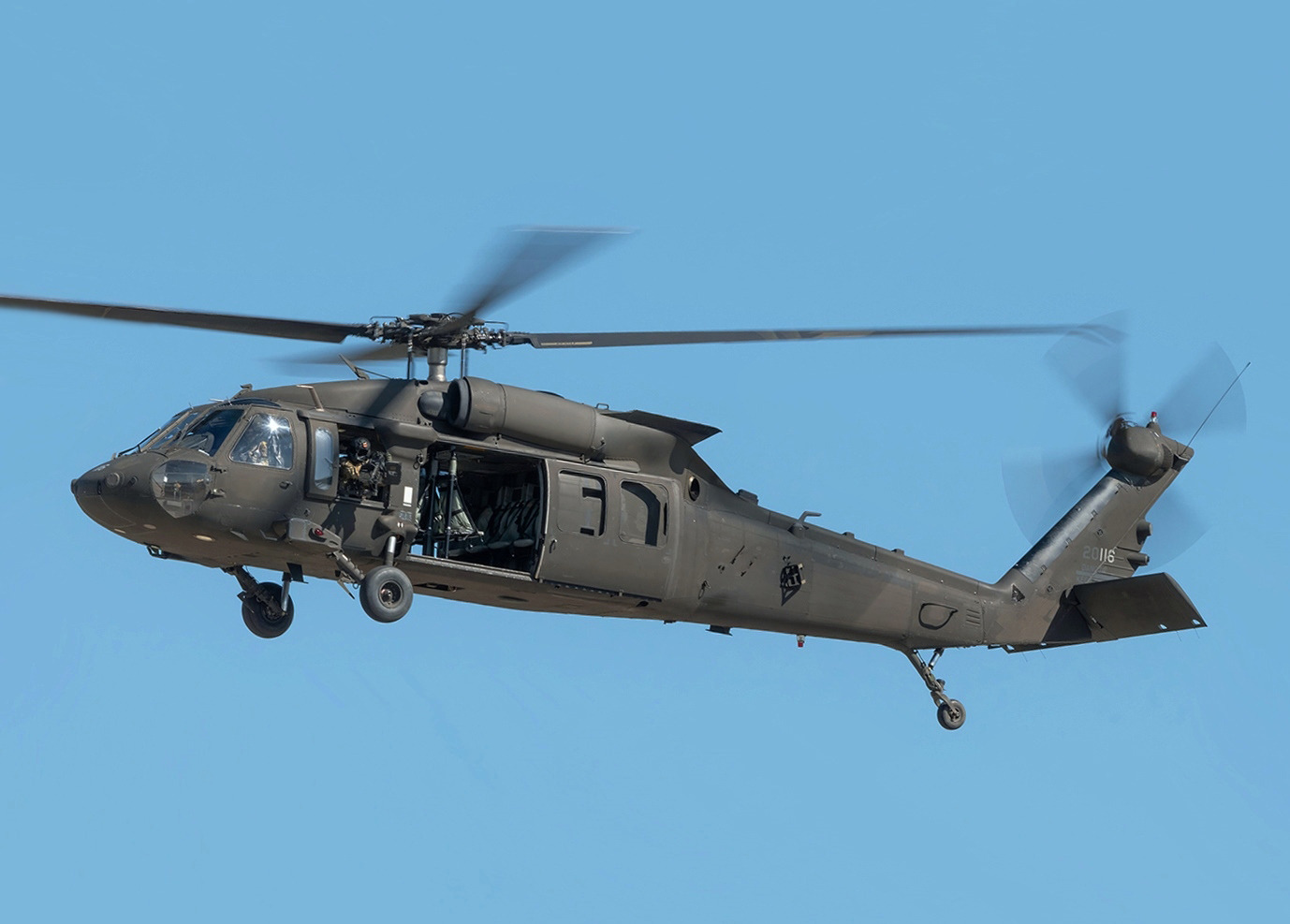
At 8:47 p.m. on January 29, 2025, a United States Army Sikorsky UH-60 Black Hawk helicopter and American Airlines Flight 5342, a Bombardier CRJ-700 regional jet operated by PSA Airlines, collided in mid-air over the Potomac River, barely half a mile from the runway at Ronald Reagan Washington National Airport. All 67 people aboard both aircraft were killed: 60 passengers and four crew on the airliner, and three crew on the helicopter.
It was the deadliest commercial aviation disaster in the United States since American Airlines Flight 587 crashed in New York in November 2001, and the first fatal crash of a major US commercial passenger flight since Colgan Air Flight 3407 in 2009. Among the victims were 28 members of the US figure skating community returning from a development camp in Wichita, Kansas.
Where it ranks: the deadliest helicopter-involved incidents
The Potomac collision is the third-deadliest helicopter-involved incident in recorded history, and the deadliest ever on US soil.
A striking pattern emerges: the deadliest helicopter incidents overwhelmingly involve large military transport helicopters or commercial passenger-carrying types. The Potomac crash is unique among these - the helicopter itself carried only three people. The 64 deaths on the airliner are what make this incident so catastrophic, and what distinguishes it from every other helicopter accident in history.
What happened
The Black Hawk, callsign Priority Air Transport 25, had departed Davison Army Airfield in Virginia on a nighttime training mission for a simulated VIP extraction exercise using night-vision goggles. The helicopter was flying south along the Potomac River on a designated helicopter route known as Route 4, which runs directly beneath the approach corridor for Runway 33 at Reagan National.
Meanwhile, American Airlines Flight 5342 was on final approach to Runway 33 from the south, having been redirected from its original runway assignment due to congestion. This change put the CRJ-700 on a converging path with the helicopter route below.
Fifteen seconds before impact, the flight instructor aboard the Black Hawk, Chief Warrant Officer 2 Andrew Loyd Eaves, asked the pilot, Captain Rebecca M. Lobach, to change course with a sharp left turn toward the east river bank. Captain Lobach acknowledged but failed to execute the manoeuvre in time. The two aircraft collided at approximately 300 feet altitude. The helicopter exploded on impact and both aircraft plunged into the Potomac.
The collision was captured on a webcam at the Kennedy Center for the Performing Arts and by multiple witnesses on the ground.
The investigation: five failures that aligned
The National Transportation Safety Board released its final findings on January 27, 2026, after a year-long investigation that included three days of public hearings. NTSB Chair Jennifer Homendy was unequivocal: this was "100% preventable."
Rather than identifying a single cause, the NTSB documented five overlapping systemic failures. Any one of which, if addressed, could have prevented the collision.
1. Dangerous airspace design. The FAA's helicopter route along the Potomac allowed military and civilian helicopters to fly as close as 75 feet below commercial aircraft on approach to Runway 33. When factoring in allowable altimeter errors and Army rules permitting pilots to hold altitude within 100 feet, the actual separation between helicopters and airliners could be effectively zero. FAA data uncovered by the NTSB found that roughly half of all helicopters flying near Reagan National exceeded altitude limits at least once while on the route involved in the crash.
2. Ignored warnings. Air traffic controllers at Reagan National had repeatedly raised concerns to the FAA about inadequate separation between helicopter traffic and the Runway 33 approach path. Other helicopter operators had also flagged known conflict areas. The FAA did not act on these warnings. The NTSB found dozens of near-miss incidents involving helicopters and fixed-wing traffic in the three years before the crash, and tens of thousands of recorded close-proximity events in the same airspace.
3. Altimeter discrepancy. The Black Hawk's barometric altimeter was reading approximately 80 to 130 feet lower than the helicopter's actual altitude above sea level. Post-crash testing of three identical Black Hawks from the same Army unit confirmed this systematic error when flying at speed over the tidal Potomac. The crew likely believed they were flying well below the approach corridor when they were, in fact, directly in it.
4. ADS-B turned off. The Black Hawk was flying with its Automatic Dependent Surveillance-Broadcast transponder turned off, per an FAA memorandum allowing military aircraft to do so for security purposes. Had ADS-B been active, the CRJ-700's collision avoidance system could have provided the airline crew with an alert up to 59 seconds before impact - nearly a full minute of warning. Military helicopters continue to operate with ADS-B off in the Washington D.C. area to this day.
5. Controller overload. A single air traffic controller was managing both local air traffic and helicopter traffic simultaneously - communicating with six airplanes and five helicopters at the time of the collision. The controller had complained earlier in the shift about being overwhelmed, but the supervisor did not separate the positions. A critical instruction to the Black Hawk to stay behind the approaching airliner was cut off by a momentary press of the radio microphone in the helicopter cockpit.
Washington D.C.: a history of helicopter incidents
The Potomac disaster was not an isolated event in Washington's airspace. The RotorAlert database records four helicopter incidents in the Washington D.C. area, including a near-repeat just three months later.
On May 1, 2025, barely three months after 67 people died, another US Army Black Hawk helicopter caused two commercial jetliners to abort their landings at the same airport. Transportation Secretary Sean Duffy described the incident as "unacceptable." The FAA and NTSB opened separate investigations.
The recurrence of military helicopter conflicts at Reagan National, even after the deadliest US air disaster in two decades, underscores the systemic nature of the problem identified by the NTSB.
Military helicopter accidents: a global view
Military helicopter operations carry inherently higher risk than civilian flying - training at night, operating in conflict zones, flying at low altitude with heavy loads. The RotorAlert database reflects this elevated risk profile.
The US Army's 76 fatalities are dominated by the Potomac collision (67) and a 2021 training accident near Leesburg, Virginia (4 killed in a midair collision between two Army helicopters). The Israeli and Russian totals each reflect single catastrophic incidents - the 1997 midair collision of two S-65 transport helicopters over She'ar Yashuv (73 killed) and the 2002 shootdown of a Mi-26 at Khankala, Chechnya (127 killed).
The UH-60 Black Hawk
The Sikorsky UH-60 Black Hawk has been the backbone of US Army aviation since 1979, with more than 4,000 airframes produced. It serves in over 25 countries worldwide for troop transport, medevac, VIP transport, search and rescue, and special operations.
The Black Hawk was designed to survive combat - its twin engines, redundant flight controls, and crash-resistant fuel system make it one of the most survivable military helicopters ever built. The Potomac crash was not a mechanical failure or a design flaw in the helicopter itself. It was a systemic failure of the airspace management and regulatory oversight that was supposed to keep military and civilian aircraft safely separated.
In the RotorAlert database, the UH-60 appears in 8 recorded incidents worldwide, with 77 total fatalities. The vast majority of those deaths (67) came from the Potomac collision, an event that had nothing to do with the helicopter's airworthiness and everything to do with where it was allowed to fly.
What changed after the crash
The NTSB issued a series of safety recommendations following the investigation:
The FAA was directed to redesign helicopter routes around Reagan National to eliminate conflict points with commercial approach corridors. Route 4 - the helicopter route that enabled the collision - was suspended immediately after the crash and has not been reinstated.
The NTSB recommended that the Army mandate ADS-B transponder use for all flights in the National Capital Region, ending the security exemption that allowed military helicopters to fly invisible to civilian collision avoidance systems.
The board also called for a review of staffing practices at Reagan National's control tower, specifically the practice of combining local and helicopter control positions during periods of high traffic.
Whether these recommendations will be fully implemented remains to be seen. As Homendy noted at the final hearing, the FAA had received warnings about this exact scenario for years and failed to act. The 67 people who died on January 29, 2025 paid the price for that inaction.
A note on how we count this incident
In the RotorAlert database, this incident is recorded as a single entry under the helicopter (Sikorsky UH-60) with all 67 fatalities attributed to it. This reflects the standard approach used by investigation authorities for midair collisions involving a helicopter and a fixed-wing aircraft: one event, one fatality count. The helicopter's presence in the restricted airspace was identified as the proximate cause of the collision, making the helicopter entry the appropriate record for tracking purposes.
---
Data sourced from the RotorAlert incident database, NTSB investigation reports, and the Wikipedia article on the 2025 Potomac River mid-air collision. For the full NTSB final report, see DCA25MA108.