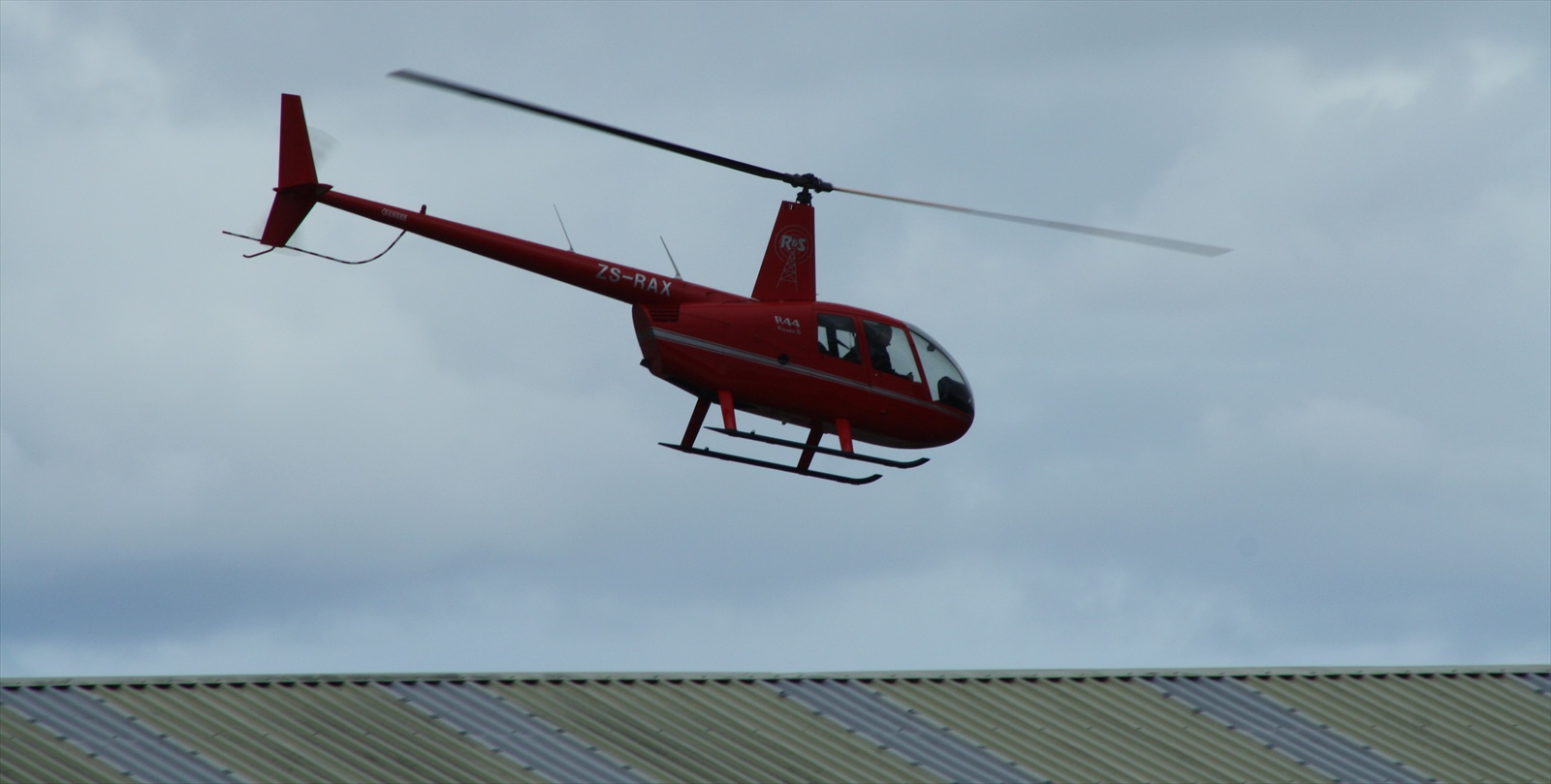
Why does the Robinson helicopter have so many accidents?
An analysis of 1000 Robinson helicopter incidents — causes, trends, and what the data tells us.
Robinson helicopters occupy a singular position in the global rotorcraft fleet. Designed as affordable, lightweight piston and turbine machines for training, private use, and light commercial operations, they have placed helicopter flight within reach of thousands of operators worldwide. The R22 defined a generation of flight instruction; the R44 became the world's best-selling helicopter; the R66 extended the family into turbine territory. That ubiquity, however, carries a corresponding weight in the safety record — and the data held in RotorAlert's incident database demands careful examination.
The Numbers
Across all Robinson models, RotorAlert records 1,000 incidents, resulting in 504 fatalities and 274 fatal accidents — a fatal accident rate of 27.4%. To put that plainly: more than one in four Robinson incidents recorded in this database ended with at least one death. That is not a manufacturing indictment in isolation; it reflects the operational environments these aircraft inhabit, the experience levels of pilots who fly them, and the physics of lightweight rotorcraft. But it is a number that demands context and scrutiny.
The R44 and R44 II together account for 574 incidents — more than half the total — which broadly tracks their dominance of the global fleet. The R22 and R22 Beta variants combine for roughly 330 incidents, reflecting decades of training use. The newer R66 contributes 61 incidents, a figure that will grow as the turbine fleet matures and expands.
Most Common Causes
The cause data contains a significant analytical caveat that must be stated plainly: 807 of 1,000 incidents — over 80% — are classified as under investigation. This limits any firm causal conclusions. Of the incidents where a cause has been determined, pilot error dominates at 127 cases, representing roughly 64% of resolved incidents. Weather accounts for 33, mechanical failure for 26, and controlled flight into terrain (CFIT) for 5. The near-absence of CFIT as a standalone category likely reflects both the low cruise altitudes typical of Robinson operations and the probability that some CFIT events are absorbed into the pilot error classification. The mechanical failure figure — 26 incidents across a fleet this size — is relatively modest, though the R22's historical issues with low-rotor-RPM and mast bumping under specific flight conditions have been the subject of decades of FAA guidance and mandatory service bulletins that predate this dataset.
Geographic Patterns
The United States accounts for 690 incidents — 69% of the global total — which is proportionate to the country's enormous Robinson fleet and its comprehensive incident reporting infrastructure. Australia (40), Russia (41), and the United Kingdom (38) follow, each reflecting substantial Robinson populations in training and private use. Brazil's 36 incidents and South Africa's 22 speak to the aircraft's penetration into emerging aviation markets where regulatory oversight and reporting quality vary considerably. The geographic concentration in English-speaking, well-resourced nations also raises a methodological concern: incidents in countries with weaker reporting cultures are likely underrepresented, meaning the true global toll may be higher than these figures suggest.
Year-by-Year Trend
Incident counts rose gradually from 45 in 2008 to a peak of 79 in 2021, with secondary peaks in 2017 (76), 2018 (71), and 2019 (72). The drop in 2020 to 48 almost certainly reflects the global aviation contraction caused by COVID-19 rather than any genuine safety improvement. The 2024 figure of 26 reflects an incomplete reporting year and should not be read as a downward trend.
What the Data Suggests
Several threads warrant attention from researchers and regulators. First, the sheer volume of unresolved causes — 80% — undermines systematic learning; closing that investigation backlog is itself a safety priority. Second, pilot error's dominance among resolved causes is consistent with longstanding concerns about the Robinson fleet's concentration among low-hour pilots, in aircraft that are sensitive to mishandling in autorotation and at low rotor RPM. Third, the 27.4% fatal accident rate suggests that when Robinson incidents occur, survival is far from guaranteed — a function of low mass, limited crash energy absorption, and often remote operating environments. The data does not assign blame to any single factor. It argues, clearly, for continued scrutiny.