Bell helicopters: 925 incidents and the story behind aviation's most ubiquitous name
Bell is the second most incident-prone helicopter manufacturer in the RotorAlert database with 925 recorded incidents. From the iconic JetRanger to the military Huey, we analyse which models crash most and why.
Bell is one of the most recognisable names in aviation. From the UH-1 Huey that defined the Vietnam War to the JetRanger that became the workhorse of commercial helicopter operations worldwide, Bell aircraft have logged more flight hours than almost any other manufacturer. That volume of flying, inevitably, comes with a long accident record.
In the RotorAlert database, Bell ranks second only to Robinson with 925 recorded helicopter incidents, resulting in over 500 confirmed fatalities. But the raw numbers only tell part of the story. The real question is which Bell models crash most, and whether the causes point to design issues or the inherent risks of how these aircraft are used.
The Bell 206: one helicopter, 414 incidents
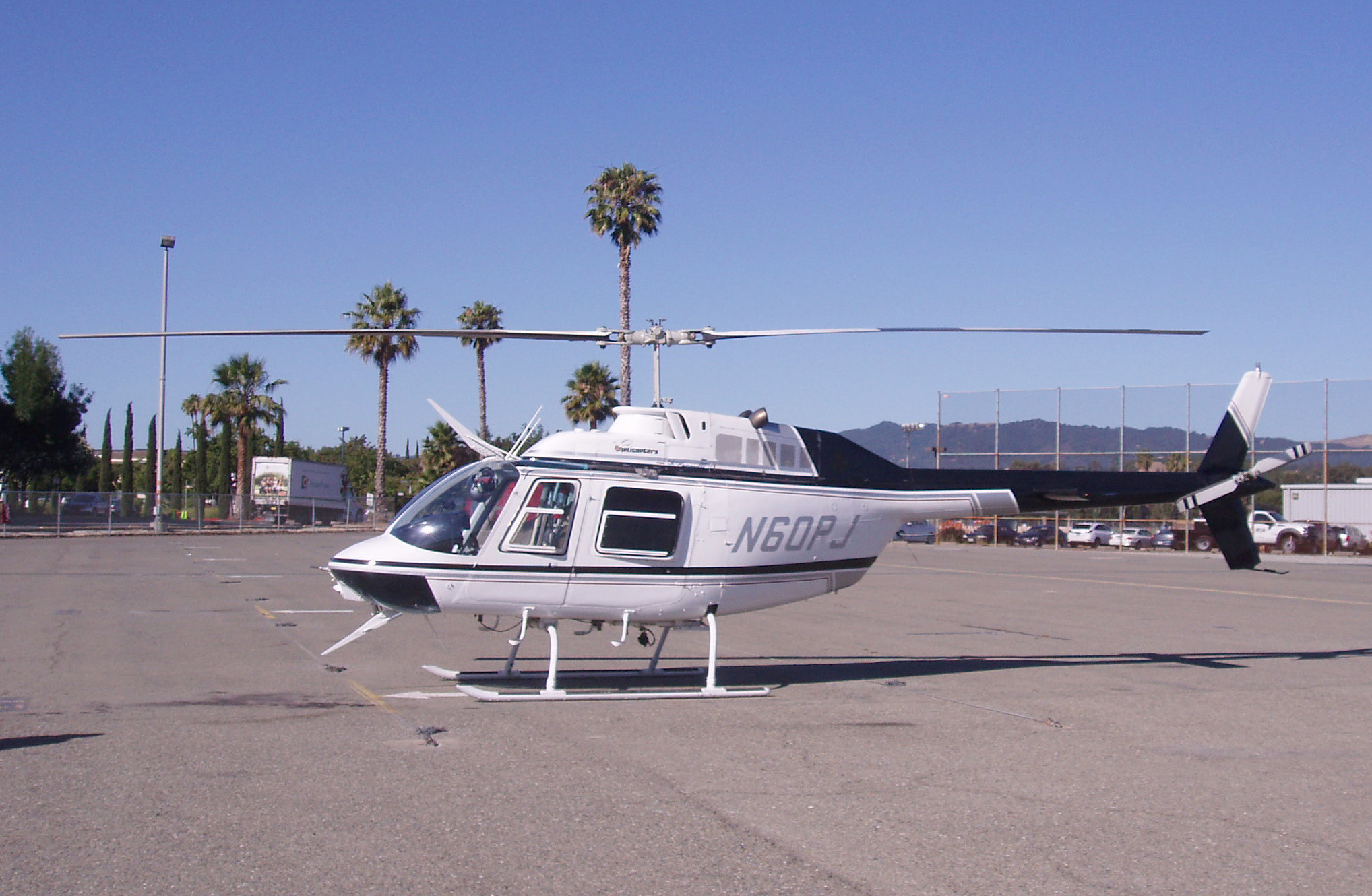
The Bell 206 JetRanger and its variants dominate Bell's incident record. Combining all 206 variants in the database gives a staggering picture.
The Bell 206 family accounts for 414 of Bell's 925 incidents, nearly 45% of the total. That concentration demands context: the 206 is one of the most produced helicopters in history, with over 7,300 airframes built since 1967. It has been used for everything from police patrols and news gathering to sightseeing tours, offshore transport, and flight training. More flight hours means more exposure to risk.
The 206's accident record closely mirrors the Robinson R44 pattern we analysed in our previous deep dive. Both are light, single-engine helicopters used extensively for training and commercial operations. Both have high incident counts that reflect their enormous installed base rather than any inherent design deficiency.
Beyond the JetRanger: Bell's full fleet
While the 206 dominates, Bell's incident record spans a remarkable range of aircraft.
The Bell 407 stands out with 130 incidents and 100 fatalities, giving it a notably higher fatality-per-incident ratio than the 206 family. The 407 is a more powerful single-engine helicopter frequently used for emergency medical services, law enforcement, and utility work, often in demanding conditions.
The OH-58 Kiowa (56 incidents) and UH-1 Huey (43 incidents) represent military operations, where low-altitude flying, night operations, and austere environments inherently carry more risk than civilian operations.
The Bell 47, the world's first commercially certified helicopter (1946), still appears with 45 incidents despite most airframes being 50-70 years old, a testament to how many are still flying for agricultural work and training.
The Bell 505 Jet Ranger X, Bell's newest light helicopter (certified 2017), already has 16 incidents in the database, reflecting its rapid adoption as a training and tour helicopter.
The yearly trend: is it getting safer?
Bell incident numbers have fluctuated between 40 and 68 per year over the past two decades, with no clear upward or downward trend. The 2020 dip to 32 incidents corresponds to the COVID-19 pandemic, when flight hours dropped sharply across the industry. The 2022 spike to 68 incidents followed the post-pandemic recovery in flight activity.
2026 is on pace for approximately 40-45 incidents based on the first half data (18 through mid-July), roughly in line with the long-term average.
Fatalities tell a similar story. The annual death toll from Bell helicopter crashes has remained stubbornly consistent at 20-50 per year, with occasional spikes driven by single high-casualty events.
What causes Bell crashes?
Of the incidents where a probable cause has been determined, pilot error leads at 70 incidents, followed by mechanical failure (36) and weather (21). However, the overwhelming majority of Bell incidents (784 of 925) remain classified as "under investigation" or have no determined cause, reflecting the NTSB's often multi-year investigation timeline.
The pilot error figure is consistent with industry-wide patterns. Studies by the International Helicopter Safety Team have consistently found that approximately 70-80% of helicopter accidents involve human factors. Bell's ratio is no different from other manufacturers.
Mechanical failures account for 36 incidents, spanning engine failures, transmission problems, and tail rotor malfunctions. The Bell 206's Allison 250 turboshaft engine has been the subject of multiple airworthiness directives over its decades of service, though its overall reliability record is considered good by industry standards.
Severity: how deadly are Bell crashes?
Of 925 total Bell incidents, 260 (28.1%) resulted in at least one fatality. That fatal rate is higher than Robinson's (which runs around 15-18%), but the comparison is misleading. Bell's fleet includes military helicopters (UH-1, OH-58) and heavy commercial types (412, 212) that operate in inherently riskier environments than Robinson's light training and recreational helicopters.
The 580 incidents classified as "unknown" severity reflect older NTSB records where the outcome was not recorded in structured form, not necessarily that those incidents were minor.
Bell vs Robinson: the two giants compared
Bell and Robinson together account for over 2,000 incidents in the RotorAlert database, more than half of all recorded helicopter accidents. Both manufacturers produce high-volume, relatively affordable helicopters used worldwide for training, commercial work, and private flying.
The key difference is in their fleet composition. Robinson's incidents are almost entirely concentrated in two light piston helicopters (R22 and R44). Bell's incidents span a vastly wider range: from the two-seat Bell 47 to the 15-passenger Bell 412, from agricultural crop dusters to military gunships.
This means Bell's aggregate statistics are less meaningful than Robinson's. A Bell 47 spraying crops in Oklahoma and a Bell 412 flying offshore in the North Sea face completely different risk profiles, even though both appear under the same manufacturer name in the database.
What the data tells us
Bell helicopters are not unusually dangerous. Their high incident count is a function of three factors: the sheer number of airframes flying worldwide, the diversity of missions they perform (including inherently risky military and offshore operations), and the decades-long service life of models like the 206 and UH-1.
The Bell 206 JetRanger, despite its 414 incidents, remains one of the most trusted light turbine helicopters ever built. Its accident rate per flight hour is comparable to other helicopters in its class. The same is true of the Bell 407, which despite 130 incidents serves as the backbone of helicopter EMS operations across North America.
The real takeaway from Bell's data is not that any particular model is dangerous, but that helicopter flying itself carries inherent risks that no amount of engineering can fully eliminate. Pilot decision-making, weather, wire strikes, and the demanding low-altitude environment in which helicopters operate will always generate accidents. Bell's long history simply gives us more data points to study than almost any other manufacturer.
---
Data sourced from the RotorAlert incident database. For the full Bell helicopter incident record, see our Bell aircraft page. For comparison with Robinson, see our Robinson helicopter deep dive.